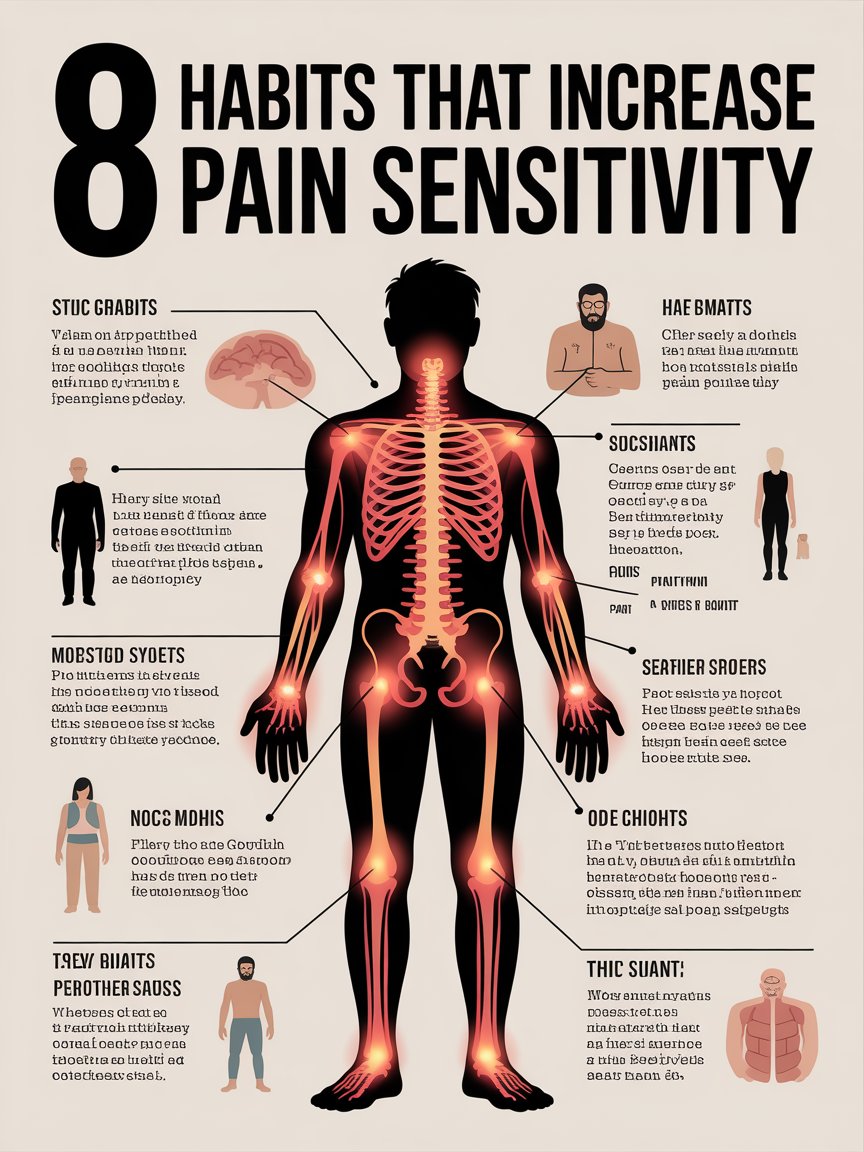
8 Habits That Increase Pain Sensitivity
Introduction
Pain sensitivity can change from day to day, especially in people living with Fibromyalgia or Chronic Pain. Sometimes the issue isn’t just the condition itself, but certain daily habits that make the nervous system more reactive. Understanding these habits can help you reduce flare-ups and improve comfort.
1. Poor Sleep Habits
Not getting enough restorative sleep makes the nervous system more sensitive.
When sleep is disrupted, your body has less ability to regulate pain signals, making even mild discomfort feel stronger.
What to Improve
Maintain a consistent sleep schedule and create a calm bedtime routine.
2. High Stress Levels
Stress directly increases how your brain processes pain.
When you’re stressed, your muscles tense up and your body becomes more alert to discomfort.
What to Improve
Use relaxation techniques like breathing exercises, meditation, or gentle movement.
3. Physical Inactivity
Lack of movement can make the body more stiff and reactive.
Inactive muscles and joints often increase overall pain sensitivity over time.
What to Improve
Include light daily activity such as walking or stretching.
4. Overexertion
Doing too much physical activity without rest can backfire.
Overworking your body increases inflammation and can heighten pain responses.
What to Improve
Balance activity with rest and avoid pushing through pain.
5. Poor Nutrition
Unhealthy eating habits can affect inflammation levels in the body.
Highly processed foods and excess sugar may contribute to increased pain sensitivity.
What to Improve
Focus on balanced meals with whole, nutrient-rich foods.
6. Dehydration
Not drinking enough water can affect muscle and nerve function.
Even mild dehydration can make pain feel more intense and widespread.
What to Improve
Stay hydrated throughout the day with regular water intake.
7. Negative Thinking Patterns
Your mental state influences how you experience pain.
Constant worry or focusing on pain can increase sensitivity and make symptoms feel worse.
What to Improve
Practice mindfulness and try to shift focus toward calming thoughts.
8. Irregular Daily Routine
A chaotic or inconsistent routine can disrupt your body’s balance.
Irregular sleep, meals, and activity patterns can make pain harder to manage.
What to Improve
Build a structured daily routine with consistent habits.
Understanding Pain Sensitivity
Pain is not only physical—it is also influenced by the nervous system, emotions, and lifestyle habits. Small changes in daily behavior can make a noticeable difference.
The Role of Consistency
Improving habits gradually is more effective than making sudden changes. Consistency helps your body adapt and reduces long-term sensitivity.
Building a Calmer Nervous System
Habits like good sleep, gentle movement, and stress management help “train” your body to respond less intensely to pain.
Long-Term Benefits
Reducing these habits can lead to fewer flare-ups, improved comfort, and better control over daily symptoms.


