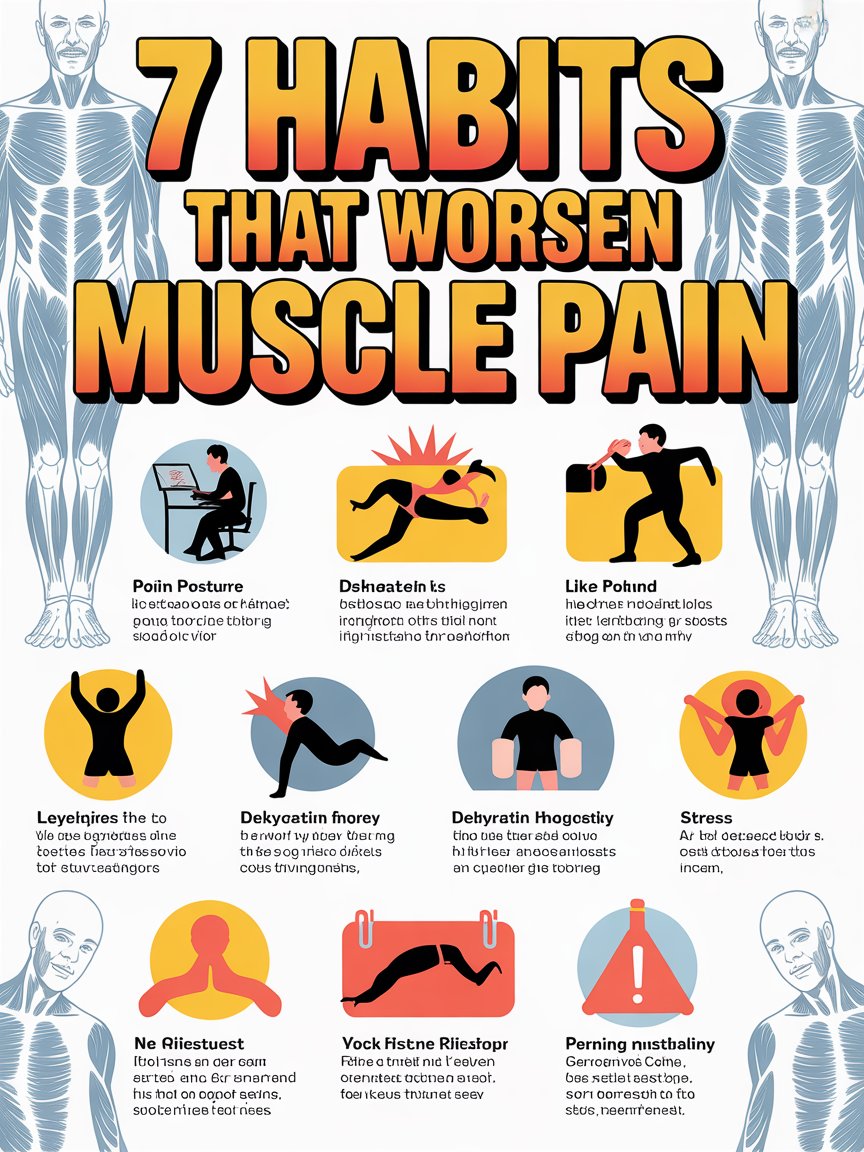
7 Habits That Worsen Muscle Pain
Introduction: Why Muscle Pain Gets Worse
Muscle pain can come from overuse, stress, poor posture, or chronic conditions like fibromyalgia. While occasional soreness is normal, certain daily habits can make pain worse and slow down recovery. Understanding these habits is the first step toward reducing discomfort and improving muscle health. Small lifestyle changes can make a noticeable difference over time.
1. Sitting for Long Periods
Staying in one position for too long can cause muscles to become stiff and tight. Sitting for extended hours, especially with poor posture, puts strain on the neck, shoulders, and lower back. Taking short breaks to stretch or walk can help keep muscles flexible and reduce pain.
2. Poor Posture
Slouching or sitting incorrectly can place extra stress on muscles and joints. Over time, this can lead to chronic tension and discomfort. Maintaining proper posture while sitting, standing, and using devices helps reduce unnecessary strain on the body.
3. Skipping Stretching
Not stretching regularly can lead to tight muscles and reduced flexibility. Tight muscles are more likely to become sore or injured. Gentle daily stretching can improve circulation, increase flexibility, and reduce muscle stiffness.
4. Overexerting During Exercise
Pushing your body too hard during workouts can lead to muscle strain and increased pain. Overexertion without proper rest can worsen soreness and delay recovery. It is important to exercise at a comfortable level and gradually increase intensity.
5. Not Drinking Enough Water
Dehydration can contribute to muscle cramps and fatigue. Muscles need proper hydration to function efficiently. Drinking enough water throughout the day supports muscle recovery and helps reduce pain.
6. Poor Sleep Habits
Lack of quality sleep can make muscle pain feel worse. During sleep, the body repairs and recovers muscles. Without enough rest, the body may not heal properly, leading to ongoing discomfort and fatigue.
7. High Stress Levels
Stress causes muscles to tighten, especially in the neck, shoulders, and back. Chronic stress can keep muscles in a constant state of tension, increasing pain over time. Relaxation techniques such as deep breathing or meditation can help release tension and reduce discomfort.
Conclusion: Improving Habits for Pain Relief
Muscle pain is often influenced by everyday habits. By staying active, maintaining good posture, stretching regularly, and managing stress, you can reduce discomfort and support muscle health. Making small, consistent changes can lead to long-term relief and better overall well-being.


