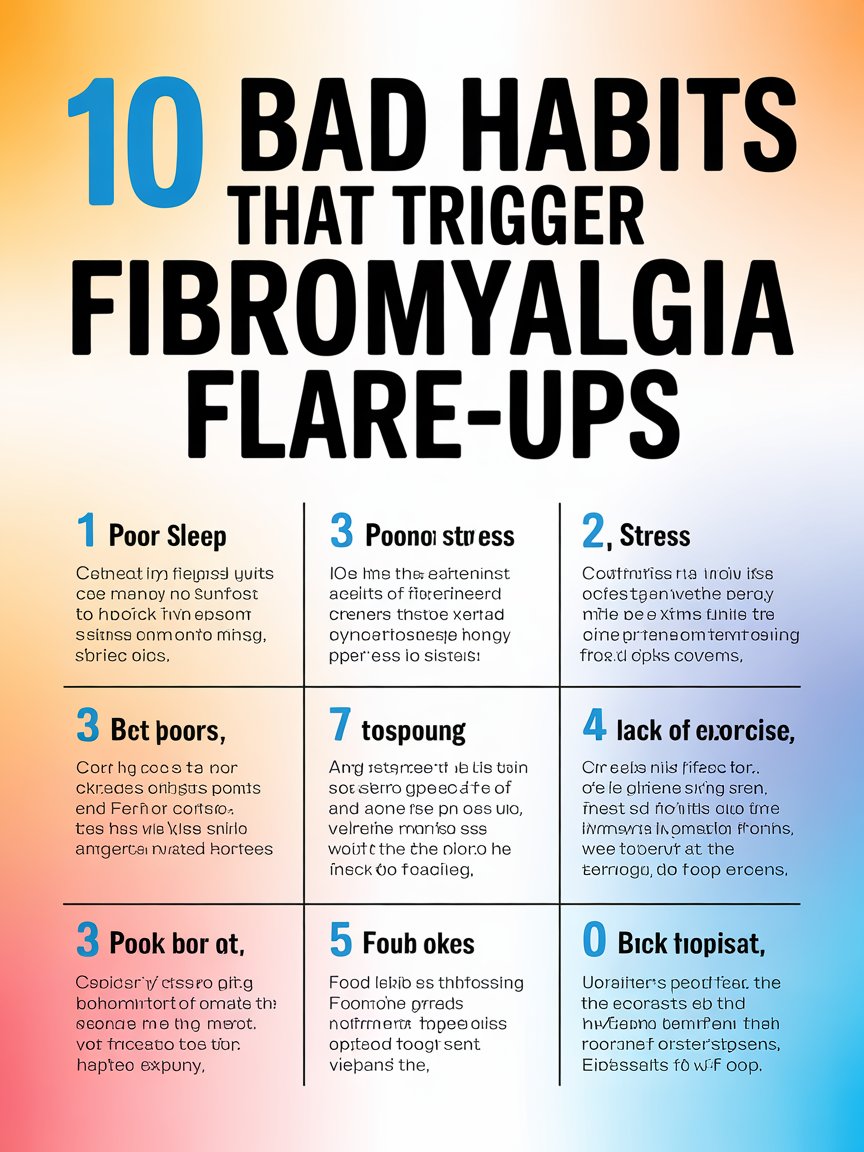
10 Bad Habits That Trigger Fibromyalgia Flare-Ups
Fibromyalgia flare-ups can often be traced back to everyday habits that put extra stress on your body. While triggers vary from person to person, certain patterns are known to increase pain, fatigue, and discomfort. Breaking these habits can help you better manage symptoms and reduce the frequency of flare-ups.
1. Skipping Meals
Irregular eating can cause blood sugar drops.
This leads to fatigue, irritability, and increased pain sensitivity.
2. Eating Too Much Processed Food
Highly processed foods often contain additives and excess Sugar.
These can increase inflammation and trigger pain.
3. Overusing Caffeine
Too much Caffeine may disrupt sleep patterns.
Poor sleep is a major contributor to fibromyalgia flare-ups.
4. Poor Sleep Habits
Inconsistent sleep schedules or lack of rest can worsen symptoms.
Sleep is essential for recovery and pain management.
5. Overexerting Yourself
Doing too much physical or mental activity can overwhelm your body.
This often results in painful flare-ups and prolonged fatigue.
6. Staying Completely Inactive
Avoiding movement can lead to stiffness and muscle weakness.
Gentle activity helps maintain flexibility and reduce discomfort.
7. Ignoring Hydration
Not drinking enough water can worsen fatigue and muscle pain.
Hydration is key for overall body function.
8. Eating Trigger Foods
Foods like Gluten or Milk may trigger inflammation.
Ignoring these sensitivities can lead to ongoing discomfort.
9. High Stress Levels
Chronic stress increases pain sensitivity and drains energy.
It can quickly trigger or worsen flare-ups.
10. Drinking Alcohol Frequently
Alcohol can disrupt sleep and increase inflammation.
It may intensify pain and fatigue during flare-ups.
Final Thoughts
Avoiding these bad habits can make a significant difference in managing fibromyalgia flare-ups. By creating a balanced routine that supports rest, nutrition, hydration, and stress management, you can reduce symptom severity and improve your daily quality of life. Small, consistent changes can lead to long-term relief.


