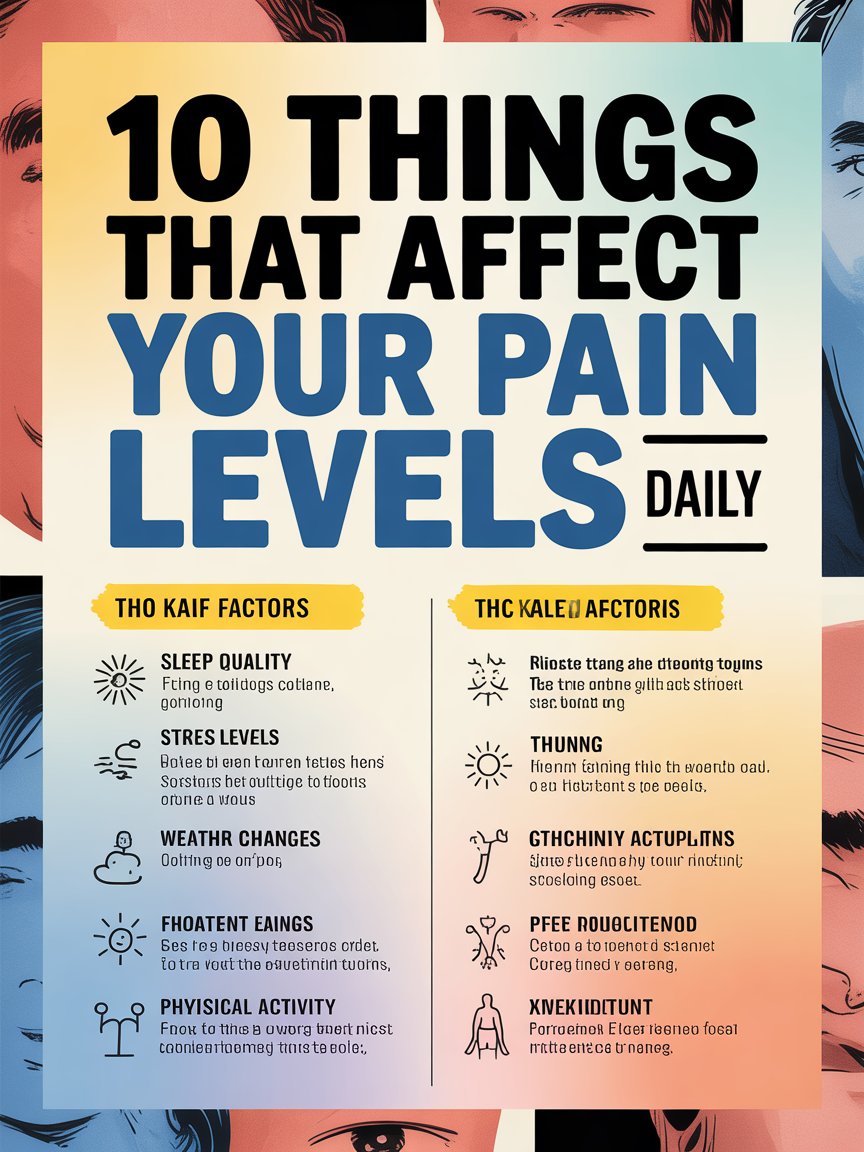
10 Things That Affect Your Pain Levels Daily
Introduction
Pain levels can change from day to day, often influenced by small habits and lifestyle factors. For people living with Fibromyalgia or Chronic Pain, understanding these daily influences can help reduce flare-ups and improve overall comfort.
1. Sleep Quality
Poor or inconsistent sleep increases pain sensitivity.
Without proper rest, your body struggles to recover and regulate pain signals.
What to Improve
Stick to a regular sleep schedule and create a relaxing bedtime routine.
2. Stress Levels
Stress can amplify how your body experiences pain.
It leads to muscle tension and heightened nervous system activity.
What to Improve
Practice stress-management techniques like deep breathing or meditation.
3. Physical Activity
Your level of movement plays a key role.
Too little activity can cause stiffness, while too much can trigger pain.
What to Improve
Maintain a balance with gentle exercises like walking or stretching.
4. Diet and Nutrition
What you eat affects inflammation and energy.
Poor dietary choices can worsen pain and fatigue.
What to Improve
Focus on whole, balanced meals with nutrient-rich foods.
5. Hydration
Dehydration can increase muscle pain and fatigue.
Lack of fluids affects how your body functions.
What to Improve
Drink enough water throughout the day.
6. Weather Changes
Environmental factors can influence pain levels.
Cold, humidity, or pressure changes may trigger discomfort.
What to Improve
Dress appropriately and adjust your routine during extreme weather.
7. Posture
Poor posture can strain muscles and joints.
This often leads to increased tension and localized pain.
What to Improve
Maintain proper posture and take breaks to stretch.
8. Emotional Health
Your mood affects how you feel physically.
Anxiety or low mood can increase pain perception.
What to Improve
Prioritize mental health and seek support when needed.
9. Daily Routine
An inconsistent routine can disrupt your body’s balance.
Irregular habits make pain harder to manage.
What to Improve
Create a structured daily schedule.
10. Listening to Your Body
Ignoring warning signs can worsen symptoms.
Pushing through pain often leads to flare-ups.
What to Improve
Pay attention to your body and adjust activities as needed.
Understanding Daily Pain Fluctuations
Pain is influenced by a combination of physical, emotional, and environmental factors. Recognizing these helps you take better control.
Small Changes, Big Results
Even minor improvements—like better sleep or hydration—can significantly reduce daily pain levels.
Building Better Habits
Consistency in healthy routines helps stabilize your body and reduce discomfort over time.
Long-Term Benefits
Managing these factors can lead to fewer flare-ups, improved mobility, and better quality of life.


